Poker Blog

As Promised, Arjel Revokes French License For Full Tilt

ArjelWhile Full Tilt Poker scrambled to complete a deal with its mysterious “European investors” in time to save the company from further damage, the site failed to have any success in solving their problems, with negotiations with the Alderney Gaming Control Commission (AGCC) ending in a lot of hypothetical discussions.

Full Tilt has been scrambling to get its site reopened in Europe as quickly as possible, due in large to threats from Arjel, the organization that oversees French gaming (Arjel is to France what the AGCC is to Alderney) that they will lose their license if French players are not allowed access to their accounts and allowed to play “immediately”. A week later, Arjel has announced that Full Tilt’s time is up, and the regulatory body for online poker play in France has suspended Full Tilt’s license to play in France.

The English translation of Arjel’s statement is as follows:

Paris, July 4, 2011
Suspension of registration of the company Rekop Limited (fulltiltpoker.fr)
The panel of the Regulatory Authority of online gaming has decided to suspend, as a precaution, the approval of the operator of online poker.
After this period of suspension, justified by the interruption technique to access the site. Fr and the need for new economic and financial guarantees from the operator, who was given notice on 16 May file a request for confirmation of approval, the college will decide the continuation or revocation of this approval.
The ARJEL is in contact with the operator of any conditions to ensure a satisfactory refinancing of the latter, a necessary condition for confirmation of the approval and protection of the interests of players.

As Arjel explains in their statement, because of the loss of license from the AGCC, Full Tilt cannot open their doors to new players until their American players have been given their money back, and the site has no means of gaining income, due to the revocation of their license, so the site will be forced to sell. Because of the wild ride that Full Tilt Poker has been on since Black Friday, but especially in the last week and a half, Arjel has decided to pull Full Tilt Poker’s license to operate in France– largely as a precaution. Arjel does not want to see what happened to American Full Tilt Poker players happen in France.

The Full Tilt website, which previously said that the site was down first for “system maintenance” and then for “a system upgrade” (neither of which is true, save for in the most generous interpretation of those words), now has a message from the AGCC, stating that they are in discussions with Full Tilt and a still-unnamed third party to try to reopen the Full Tilt Poker site, but that, as of yet, talks are all that’s happening.

Read the statement from the AGCC below:

Alderney Gambling Control Commission (AGCC) is in discussions, all be at an early stage, with its licensees trading as Full Tilt Poker and a third party concerning the prospective refinancing of Full Tilt Poker.
The objective of these discussions is to enable the site to re-open to its current and prospective players.
Contrary to current reports circulating in the media, AGCC has not authorised any statement by legal counsel in this regard and has no knowledge of the comments attributed by the editor of Gambling City.net to a Mr. Werner Bers, of whom we are otherwise unaware, and disputes the correctness of his statement.
All and any further authorised announcements on this matter will be found on the website of AGCC at www.gamblingcontrol.org

Only time will tell if Full Tilt Poker will make it back after the series of surprising upsets that it has suffered, but with every license that gets pulled, it seems a little more unlikely that Full Tilt will be able to reclaim the status that it once held.

WSOP Day 36 Brings Action Back To Event

WSOP 2011After a relatively slow Day 35 of the World Series of Poker 2011, Day 36 proved to be action-packed as two new events (the $1.5K No-Limit Hold’em and $5K Pot-Limit Omaha Hi-Low Split 8 or Better) were introduced and the field was whittled down to the final tables in Events 54 and 55, giving spectators some real insight into who may be the new bracelet winners in these two events.

Event 54: $1K No-Limit Hold’em

The $1K No-Limit Hold’em had a record number of entrants this year, becoming the second-largest WSOP event of all time (the first being the Stimulus inaugural event from 2009). At the end of Day 3, the 4,576 entrants had been whittled down to nine and the final table has been set, and the Americans hold such an small number of spots that one would think that this was the European Poker Tour. Dror Michaelo, Douglas Mackinnon and Joshua Evans are the three US players at the final table, while Russia’s Maxim Lykov has the chip lead and fellow Russian Stanislav Alekhin has a shorter stack and a reputation as a fierce player, thanks to his heads-up game against John Juanda in the 2008 Main Event.

Event 55: $50K Poker Player’s Championship

Some fierce competition in one of the favourite events at the World Series of Poker tries to knock the players down to the final table, but nine players were still hanging on when they called it a night. Minh Ly, who has the chip lead with 5,215,000 chips, but will still have to face both Phil Hellmuth (2,245,000 chips) and Ben Lamb (1,180,000 chips), both of whom are chasing a Player of the Year title. Ly, who has had 12 WSOP cashes but has yet to nab a bracelet, has just as much on the line and is sure to put up a fierce fight.

Going into Day 4, table positions and chip amounts are as follows:

  • Seat 1 Brian Rast 2,660,000
  • Seat 2 George Lind 2,315,000
  • Seat 3 Phil Hellmuth 2,245,000
  • Seat 4 Owais Ahmed 1,425,000
  • Seat 5 Scott Seiver 725,000
  • Seat 6 Minh Ly 5,215,000
  • Seat 7 Ben Lamb 1,180,000
  • Seat 8 Jason Lester 920,000
  • Seat 9 Matt Glantz 2,535,000

Event 56: $1.5K No-Limit Hold’em

The body count on day one of $1K and $1.5K events is always gruesome, but a few notable names of professional players eliminated in the first day of action for this event stand out: Antonio Esfandiari, Liv Boeree, Vanessa Selbst, and Nacho Barbero. With 3,389 players signed up for the last low-money event of 2011, one can expect a lot of big names to fall throughout the game. Today’s first day of play knocked the field down to 465 players, among whom Ben Volpe took an early strong lead which will give him the chip lead tomorrow in Day 2.

Event 57: $5K Pot-Limit Omaha Hi-low Split 8 or Better

Near chip leader Gary Bolden (98,300) after this first day of action in the last preliminary event of the 2011 World Series of Poker are Max Pescatori (72,000), who has won two WSOP bracelets before, and Brazilian Alexandre Gomes (70,400), known for holding a WSOP bracelet and a World Poker Tour title, as well as coming in second in the European Poker Tour’s PokerStars Caribbean Adventure in 2009. The 189 players left also include Mike Matusow, Huck Seed, Allen Kessler, Erik Seidel, and David Sands, so Event 57 is still anyone’s game.

WSOP Day 34 Brings A Little Relief As More Tension Builds

WSOP 2011Day 34 of the 2011 lacked the constant element of surprise that was present the previous day, which likely came as a relief to many players who could now focus on their game. One more event closed, and another two plowed forward, eliminating all the players who didn’t make the cut. Here’s the recap for today’s events:

Event 53: $1K Ladies No-Limit Hold’em Championship

The 2011 WSOP Ladies No-Limit Hold’em Championship has been the center of a lot of discussion this year, in part due to the presence of Jonathan Epstein, the singular man who made it to the last day of play in this event. To the delight and relief of the vast majority of spectators, Epstein was knocked out first in today’s play, and the Ladies Championship returned to its status as a celebration of women in poker. The play and eliminations were impressively well-rounded, with each of the players making some stunning plays and fierce eliminations throughout the final table. Marsha Wolak, a relative newcomer who credits her time spent training with Annie Duke back in 2009 as part of the reason for her unexpected win, would take first place, beating out an American-dominated final table for the bracelet and the $192,344 first place prize. Karina Jett came in second place, having been defeated by Wolak after only a single hand of head-to-head play (Wolak had a 3-to-1 chip lead at the time).

Event 54: $1K No-Limit Hold’em

The last of the $1K events for 2011 has turned out to be bigger than anyone imagined, especially given that its timing coincides with the play of the $50K Poker Player’s Championship, which certainly gets more attention. Event 54, as it turns out, has had more registrants than any other event in the history of WSOP, save for one– the 2009 kick-off “Stimulus” event. Day 1B saw the competition whittled down to 380 players from the original 2,644; they will join with the 275 players who survived Day 1A for Day 2 tomorrow. Paul Volpe had an impressive chip lead yesterday, but Eric Afriat has ended today’s competition with more than enough chips to give Volpe a run for his money throughout the remainder of the event. Many of the poker giants have fallen during the 1B action, including Galen Hall, Liv Boeree, David Williams, Jonathan Duhamel, and Michael Mizrachi.

Event 55: $50K Poker Player’s Championship

The list of players still remaining in Event 55 of the 2011 World Series of Poker reads like a laundry list of professional poker players; while the last $1K event has the largest turnout of players overall, the $50K Poker Player’s Championship certainly has the largest turnout of pro players. Benjamin Lamb, who won his first WSOP bracelet in Event 42 this year, tops the Player of the Year race and the chip count after Day 2 of this event. Lamb has made a name for himself in this year’s WSOP, but he’s followed in chips immediately by Gus Hansen, Sebastian Ruthenberg, and David Oppenheim, so he’ll have his work cut out for him if he wants to take home another bracelet. Still in the running for this event are David Benyamine, Erick Lindgren, Abe Mosseri, Phil Hellmuth, Jennifer Harman, and Steve Sung, just to name a few. The $50K Poker Player’s Championship, which switches types of poker every level (between Limit Hold’em, Omaha Hi-Low Split 8 or Better, Seven Card Razz, Seven Card Stud, Seven Card Stud Hi-Low Split 8 or Better, No-Limit Hold’em, Pot-Limit Omaha, and 2-7 Triple Draw Lowball) to lead up to a final table of No-Limit Hold’em, is still anyone’s game.

Epstein Causes An Unintentional Stir In Ladies Event

Jonathan Epstein WSOP Ladies EventJonathan Epstein didn’t join the Ladies No-Limit Hold’em Championship game to make waves. He just wanted to play in one more tournament before he left Vegas and went home to LA. Make waves, however, is exactly what he’s done, bringing to the forefront a heated issue.

Epstein wasn’t the only male who entered the ladies championship; every year, many men do. Some claim that they’re “rebelling against discrimination,” which is often code for “I think women are less skilled, so I’m going to play in the tournament because it’s an easy win” or “Hey, look at me, I’m so funny– I’m a man in a women’s tournament!” For those who genuinely think that they’re standing up to the man by entering a tournament designed for women, one has to wonder about the exact nature of the statement that they’re making. Women now have women-only basketball, football, and hockey leagues (not to mention rugby leagues and wrestling, fencing, and martial arts tournaments), precisely because there’s an unspoken understanding throughout society that the sports leagues that aren’t designated “women-only” are, of course, men-only.

Poker has been, for the longest time, an activity dominated by men. The sociological reasons for this are plentiful but largely situation-dependent: women make less money than men, therefore having less income to spend on non-essential activities; women are expected to prioritize family, such that if they have a career (and therefore the money to spend playing poker), the expectation still remains that their free time will go to home and children. In a society where women do not have the privilege that men do, saying that one is bucking the system by competing in a womens-only event is like saying that you’d like to join the Black Panthers just because you think that it’s unfair of them to exclude you for being white.

Epstein has had a hard time in the three days that he’s been playing in the event; despite solid poker playing, he is consistently booed and ridiculed by the spectators and WSOP officials alike– WSOP Media Director Seth Palansky attempted a slight at the men who had entered the event by saying that they “are not men.” One has to wonder if Palansky realizes that by saying the equivalent of “if you entered this tournament, you’re a bunch of girls,” where “girls” is an insult, is really just perpetuating a larger problem.

Winner Ladies Event 2010So then, where do we stand? If Epstein wasn’t trying to make a statement and really just wanted to play some poker after suffering some staggering losses elsewhere in the World Series of Poker, and he was just listening to the advice of his friend, who suggested the Ladies event (and, as he claims, it fit with his schedule), should he be persecuted for being in the wrong place at the wrong time? If it was legitimately an honest mistake, is the ceaseless harassment and bad sportsmanship (albeit not from the players– from the spectators) really the best way to handle the situation? Or is it enough to have to compete against some of the most incredible poker players in the world today, like Liv Boeree, Vanessa Selbst, Susie Isaacs, and Evelyn Ng? Women’s tournament or not– these are players that pretty much any rookie player would be terrified of facing. Perhaps this year’s spectators could learn to handle disappointment and disapproval with a little more grace, accepting that more good would come from cheering on the women playing than from verbally assaulting the lone man at the table.

Nevada law has changed, and the new legislature states that casinos can now ban men from competing in women-only events. By this time next year, we can expect not to relive this issue. The state of Nevada doesn’t seem to think that this is an issue of discrimination, so WSOP 2012 will have Ladies events where the final tables are full of ladies.

Day 33 Of WSOP 2011 Brings Some Surprises

World Series of Poker 2011Day 33 of the 2011 World Series of Poker has been one surprise after another. Here’s the recap:
Event 50: $5K Triple Chance No-Limit Hold’em

Eric Froehlich was a shoe-in for Event 50, but his short stack at the start of the day caused him to be knocked out early, something that none of the spectators anticipated. Antonin Teisseire of France, who called Froehlich when he went in with two million pre-flop, not only knocked the favourite out of the game but also took home his first WSOP cash– a hefty $825,604 for the first place win.

Event 51: $1.5K Pot-Limit Omaha Hi-Low Split-8 or Better

When David Singontiko sat down at the final table for Event 51, he, fellow American John Reiss, and Brazil’s Marco Oliveira were the only players who had not cashed at the WSOP before. While none of the other final players had won a bracelet before, it was still a surprise when the recent college graduate who had to ask his father for a week off of work to compete in the tournament for the very first time, won first place and $268,235. Singontiko racked up the majority of the eliminations at the table (including second place finisher Michael Yee), with some help from Jeffrey Gibralter, who came in third.

Event 52: $2.5K Mixed Hold’em (Limit/No Limit)

Matt Matros became the only repeat performer of Day 33 by snagging a second WSOP Bracelet in Event 52. His first WSOP win came a year earlier at last year’s $1.5K Limit Hold’em event, and since he’s been making final tables at the World Series of Poker since 2005, it came as no surprise that Matros was a serious contender for these two wins. Matros, a poker coach and author of a book on poker, has almost two million dollars in live tournament winnings, and today’s event added another $303,501 to that total. Matros beat out a final table full of players with several WSOP cashes under their belts (although he was the only one to have won a bracelet before), including Noah Boeken and Jonathan Lane.

Event 53: $1K Ladies No-Limit Hold’em Championship

The Ladies No-Limit Hold’em Championship ended on Day 33 in a bout of upheaval, as one of the 14 players remaining in this event is a man. Jonathan Epstein is one of about a dozen men who have decided to take advantage of the fact that a change to Nevada’s laws, which will make it legal for casinos to ban men from entering women’s tournaments, has yet to go into effect, even though it’s made it onto the books. In a sport largely dominated by men, women struggle to make a name for themselves, so in the event that Epstein, who currently sits in 7th place with about half the chips of Valerie McColligan, currently in first place with a hefty lead, were to win this tournament, he could rest assured that there would be many people who would not be amused by his audacity.

Event 54: $1K No-Limit Hold’em

This final $1K No-Limit Hold’em event managed to pull in almost 2,000 entrants, despite coinciding with the play for the infinitely popular $50K Poker Player’s Championship. Hoyt Corkins, Andy Black, Dan Heimiller, Men Nguyen, Brian Cantu, and Antonio Esfandiari were among the biggest names to enter the event, but at the end of Day 1a, only two-time bracelet winner Cantu was among the 275 entrants still standing.

Event 55: $50K Poker Player’s Championship

Professional players flock to the $50K Poker Player’s Championship, creating a small field (128 players) of some of the most impressive poker players in the world. After 10 hours, only five players were eliminated, including Phil Laak and Eli Elezra. This five-day event is anyone’s game at this point, but the competition has been (and will continue to be) absolutely fierce.

A Closer Look At Online Poker Act 2011 H.R. 2366

The Internet Gambling Prohibition, Poker Consumer Protection, and Strengthening UIGEA Act of 2011, or H.R. 2366, has received a great deal of attention since it was first introduced by Texas Republican Joe Barton, who has given the bill its most common moniker, “The Barton Bill”. The bill is often lauded as the salvation of online poker in the United States, although, in reality, should the bill pass into law without significant revision, most players will find that they’ve gotten far more than they’ve bargained for.

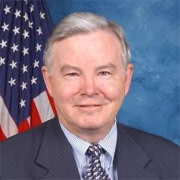
Joe BartonJoe Barton is best known for his frequent political blunders, such as apologizing to British Petroleum about the “witch hunt” that was taking place in the US as the government attempted to hold the industrial giant accountable for the unparalleled environmental disaster they created. Despite his placement as chair of the Energy and Commerce committee, Barton has frequently made statements denying the existence of global warming and criticizing the utilization of wind power, as “Wind is God’s way of balancing heat. Wind is the way you shift heat from areas where it’s hotter to areas where it’s cooler. That’s what wind is. Wouldn’t it be ironic if in the interest of global warming we mandated massive switches to energy, which is a finite resource, which slows the winds down, which causes the temperature to go up? Now, I’m not saying that’s going to happen, Mr. Chairman, but that is definitely something on the massive scale. I mean, it does make some sense. You stop something, you can’t transfer that heat, and the heat goes up. It’s just something to think about.” While it’s certainly possible for good legislature to come from lousy politicians (especially when the bill is co-sponsored by 11 others), it’s often wise to consider the the source of a bill before assuming that it will be an automatic success.

The Barton bill does make playing online poker in the United States legal, but guess what? It’s already legal. There’s nothing wrong with playing poker online in the US, as long as you don’t fund your account through your bank. Therefore, legal changes in the US need to be made to the way payments are processed, not the “legality” of playing poker online.

The bill also bans the use of credit cards to fund poker accounts, which the bill names as an attempt to prevent fraud. Whether intentional or not, this is much more an instance of legislated morality, where people will find it more difficult to gamble away money that they don’t have. There is also an element of classism present in the emphasis on this restriction, as it requires that players have more liquid assets to be able to play, and liquid assets of this sort are far more common among Barton and his fellow Tea Partiers than among the average American.

The bill also states that it wishes to preserve “state and tribal rights,” but what this really means is that Barton is rallying for more governmental control. If the bill passes as currently written, not only will the US Government have more control over internet regulation and poker winnings in particular, but a new governmental department will be created for the sole purpose of monitoring online poker activity. This department will not only ensure that all poker winnings are properly taxed (at a rate yet to be determined), but will also prosecute players who are caught cheating– using a bot or cheating in any way could lead to up to three years in already overcrowded prisons.

While American players are looking everywhere from a reprieve from the current state of poker in the United States and the Department of Justice witch-hunts for companies that accept money from US players, the best answer is very rarely to pick the very first alternative that comes along. In this case, choosing the Barton bill means sacrificing the welfare of the long term for an immediate gain.

Full Tilt Poker Target Of Class Action Lawsuit

Class Action Law Suit FTPSeveral former US players at Full Tilt Poker have grown tired of waiting for their funds to be returned to them and decided to take matters into their own hands by filing a class action lawsuit with the US District Court South District of New York, claiming Full Tilt Poker as the defendant. The lawsuit demands not only a return of the plaintiffs’ money, but also damages for suffering that they have endured at the hands of Full Tilt’s carelessness.

The court paperwork further goes on to accuse Full Tilt Poker of racketeering, stating that the only reason that players suffered losses was because executives and others associated with Full Tilt Poker willfully committed wire and bank fraud and money laundering, neglecting their customers in order to “pad their own pockets”. The plaintiffs are seeking recompense via the Racketeer Influenced and Corrupt Organization Act (RICO), which was designed in 1970 to help put an end to organized crime; by claiming that Full Tilt violated the RICO Act, the lawsuit is creating far more trouble for Full Tilt than it may initially seem. To enforce the RICO Act, the Attorney General can create a special task force aimed at investigating and uncovering any illegal operations in which Full Tilt has engaged; this gives the US government more force with which to drive the investigation into the site.

Some news sources speculate on what will become of this lawsuit after the sale of Full Tilt Poker, but class action lawsuits have a tendency to be tenacious and not simply go away when money is thrown at them, and as the RICO Act specifically covers fraud, violations of state gambling laws, and money laundering (all charges initially brought against the site in April of this year), the case itself is not without merit. A RICO indictment also means that the US Attorney General’s office can freeze assets for the company and require a performance bond (or “good faith money”), and because RICO examines patterns of behaviour for the company, the odds of a win for the plaintiffs are solid. As the plaintiffs stand to gain not only their money back, but also treble damages (damages that are multiplied by a factor of three due to the willful nature of the crimes), it is unlikely that they will back down.

Curiously enough, the suit not only names the CEOs and companies that are a part of FTP, but also brings charges against many of Team Full Tilt, including Phil Ivey, who had dropped his own suit against Full Tilt less than 36 hours before. The lawsuit claims that Ivey is a partial owner of Full Tilt (with at least 5% stake), and that he and the other professional players “represent the Full Tilt brand” and “all own an equity interest in– and are directors of– the Full Tilt and/or the entities that operate under the Full Tilt name”.

This class action suit appears to be a continuation of the charges brought against the site in April, as it cites the same evidence as the initial case, which claims that Full Tilt created a series of sham companies and used them to make US player money harder to track. The case states that this was done without the knowledge of US customers (a claim which is at best very questionable), but US law does not hold players accountable in this instance, stating that it is the responsibility of the banks and the companies to ensure that they only receive funds through legal channels.

  • To read the full text of the court documents, click here.

Full Tilt Poker Struggles To Stay Alive, Considers Sale

Full Tilt Poker ClosedWithin days of the complete shutdown of Full Tilt Poker’s operations, the company is seeking to be bought out by investors in Europe, hoping that the change of management will allow them to regain their license. Full Tilt Poker will be exchanging a majority share of their parent company, Pocket Kings, which is based in Ireland, in exchange for the money needed to repay customers the money that was in their currently-frozen accounts, as well as the cash that the company needs to defend themselves against a barrage of accusations from the US government.

The name of the European investors, as well as other details of the deal, are currently being kept on the down low, so as not to draw too much attention or be overly complicated by the lawsuits currently pending against the large poker company. In addition to the charges pending on behalf of the US Department of Justice, professional poker player and former Full Tilt Pro Phil Ivey is suing the company over the millions of dollars currently frozen in his FTP account.

Full Tilt Poker is certainly feeling the pressure to not only return players’ money, but also to get back into business. ARJEL, a French gaming regulator, has issued an ultimatum to the site: either allow French players to get online and play immediately, or suffer the consequences (in this case, we can assume that would mean that FTP would lose their licensing in France as well).

FTP has been attempting to negotiate a full or partial sale of the company since April 15, 2011, when the original attack from the US Justice Department commenced. While some investors are clearly still interested in salvaging a sinking ship, others reportedly lost all interest in Full Tilt Poker once the Alderney Gaming Control Commission (AGCC) shut down the site.

Jack BinionAmerican poker star Jack Binion is rumoured to be the newest Full Tilt Poker investor, which could potentially work out in everyone’s favour, if the circumstances play out right. While sources state that Binion has been to Ireland to negotiate the acquisition of the company, nothing is certain at the moment.
The United States is currently looking down the barrel of some serious changes to online poker, thanks to a new bill proposed by Texas Representative Joe Barton, who is attempting to prove that not all Republicans are morally opposed to having fun. Barton, who is best known for his egregious errors when it comes to environmental responsibility and the way that science works, has introduced the Barton Bill, which is still a long way from becoming law. The bill, fully called the “Internet Gambling Prohibition, Poker Consumer Protection, and Strengthening UIGEA Act of 2011” bill, or, as it’s more commonly called, H.R. 2366, would allow online poker to be available in the United States once more.

If the bill is passed into law, Jack Binion will be in an impressive position if he does, in fact, acquire Full Tilt Poker, as he will be fully equipped to relaunch the site from the United States, automatically making it the strongest contender for the US market.

PokerStars Makes An Official Statement Regarding Full Tilt Poker

PokerStars Statement on Full Tilt PokerPokerStars, which has been at the center of the poker media spotlight since last April’s Black Friday, has released a public statement about Full Tilt’s recent license suspension. Full Tilt Poker had its licence revoked on June 29th by the Alderney Gambling Control Commission (AGCC) and has been barred from accepting new players, accepting money from players, allowing players to withdraw funds, or allowing players to take part in any kind of poker game on the site (the AGCC was pretty specific that Full Tilt Poker isn’t going to be doing much of anything for quite some time). Although the Full Tilt website states that the site is merely down for maintenance, the site will not be back up until the net hearing, scheduled for late July.

PokerStars, which has, like Full Tilt and Absolute Poker, been under fire from the United States government for alleged bank fraud, money laundering and illegal gambling, assures players that there is no need to worry that the fate of Full Tilt will become the norm across the board.

The statement highlights a few key points that are an excellent strategic move, even in the instance that the next hearing regarding the Full Tilt case results in a reinstated license. PokerStars has made their points while creating a subtext so clear that it’s hard to miss (interpretation of subtext in italics below):

  • The PokerStars license is intact. It’s so intact, in fact, that they got special reiteration from the Isle of Man licensing board, saying that it’s intact. (You know whose license isn’t intact? Full Tilt– but ours is!)
  • PokerStars has already released over $100 million of US player money that had been locked in their accounts since the US Department of Justice took the site down and froze all the accounts two months ago. While there’s still a lot of funds left in limbo (about $400 million is still frozen in US player accounts), PokerStars is doing everything they can to release the remainder of the funds. Players from the United States will still have to find another site on which they can play, but at least they’ll be able to access their own money to do so. (We’ve already given your money back– or we’re about to give it back– but you know who hasn’t shown you a dime? Full Tilt and Absolute Poker! We’re very obviously trying much harder for you, so if there comes a time when you have to choose between sites, remember that we work the hardest and are the most honest!)
  • The US Department of Justice has already given PokerStars their stamp of approval to continue working elsewhere in the world. (This is all a big misunderstanding, and we think that it may just go away entirely very soon. Remember that PokerStars is working hard to find middle ground with all interested parties and governments!)

The original text of the statement is as follows:

“In light of today’s news that Alderney Gambling Control Commission has suspended Full Tilt Poker’s license, PokerStars wishes to assure our customers that their funds are completely safe and that our operations are completely unaffected.  The Isle of Man Gaming Commission today re-affirmed that PokerStars’ worldwide licensing is intact and that our operations are in full compliance with all of its requirements.  PokerStars’ online operations continue as normal and all funds in players’ accounts are safe and available for withdrawal as usual with no delays.

PokerStars also remains in full compliance with our licenses in other jurisdictions where we are regulated, including France, Italy and Estonia.

As provided under our licensing, PokerStars has always maintained the integrity and security of our players’ funds, by keeping all such funds in segregated bank accounts, always available for immediate withdrawal.

Since the actions of US Department of Justice in April, we have returned more than $120 million to US players and continue to act upon requests as they are received. Players outside the US have not been affected and all cash-outs have been processed without delays.  Further, PokerStars entered into an agreement with the Department of Justice which expressly confirmed the company’s ability to operate outside the US.

We will continue to operate as a responsible corporate citizen and are committed to serving the needs of our customers in complete compliance with our regulatory requirements.”

World Series Of Poker 2011 – Day 29 Recap

WSOP 2011Three events came to a close on June 29th, 2011, Day 29 of this year’s World Series of Poker, while an additional three events saw their players push a little closer to a WSOP bracelet.

Final Results

Event #44- $2.5K Seven Card Razz

Ralph (Rep) Porter took the bracelet for the Razz tournament at the 2011 WSOP, making this his second bracelet– the first was in 2008 for $1.5K Six-Handed No-Limit Hold’em– and increasing his lifetime WSOP earnings to very close to a million dollars. Porter beat out other former bracelet winners Robert Williamson III and Chris Bjorin for the title. Porter’s accomplishments are particularly noteworthy because his past and present wins are for games with very little in common, as Razz is based on the idea of having the worst hand, as opposed to the standard poker rules of Hold’em.

Event #45- $1K No-Limit Hold’em

Ken Griffin, an amateur poker player and full-time defense contractor from Texas, surprised everyone when he took the forty-fifth event at the 2011 WSOP and went home with both the bracelet and $455,356. This was only Griffin’s third entry in a WSOP event, and it’s not only his first win, but also his first final table and his first cash. Griffin beat out former gold bracelet winner Antonio Esfandiari, who came in seventh, for the win, as well as the other 2,888 competitors for this large event.

Event #46- $10K No-Limit Hold’em/Six-Handed Championship

Griffin wasn’t the only one to walk away with his first bracelet today– Brazilian Andre Akkari walked away with $675,117 and first place, despite odds that seemed stacked against him. In fact, at one point in the heads-up match with American Nachman Berlin, his opponent had a 3-1 chip lead against him, but Akkari rallied on Day 4 and finally moved ahead with a strong double-up, only to win the tournament shortly thereafter. This makes Akkari only the second Brazilian to win a WSOP bracelet (the first being Alexandre Gomes in 2008).

Games in Progress

Event #47- $2.5K Omaha/Seven Card Stud Hi-Low-8 or Better

Michael Mizrachi held the chip lead at the end of Day 2 of Event 47 with a hefty 407k. His nearest competitor, Abe Mosseri, trails with 303k. They will be joined by Gregory Jameson and his 283,500 chips at table 281 for the final day of action as Day 3 begins. Barry Greenstein, Scotty Nguyen, and Antony Lellouche are still in the running for this event, however, and none of them trail by too much, so this event remains anyone’s game.

Event #48- $1.5K No-Limit Hold’em

Alex Bolotin of Brooklyn, NY has the chip lead after the first day of action in Event 48 of the 2011 WSOP. While two other players are within 10,000 chips of Bolotin’s 129k, he will start Day 2 of the event at table 346, where he has a minimum 3 to 1 chip lead over the other players.

Event #49- $2.5K 2-7 Triple Draw Lowball (Limit)

Jimmy Fricke leads the action in the 2-7 Triple Draw Lowball with 69,700 chips, with Eli Elezra not far behind with 57,100. Fricke will have at least a 3 to 1 chip lead over the other players at his table at the beginning of Day 3, while Galen Hall, who has already proven himself with a 2.3 million dollar first place in at the PokerStars Caribbean Adventure Tournament earlier this year, will have the chip lead at his table.