 PokerStars has just launched their mobile app in the UK, which allows players with compatible phones to play real money games, even if they’re away from their computer. The app, which was made available for download on February 14th, allows players to play sit-and-go games, multi table, and compete in all the PokerStars tournaments.
The app is available throughout Great Britain (save for Northern Ireland), and versions exist for the iPhone, iPod, iPad, and various Android devices. The game has been rescaled to fit perfectly on the screen of the various devices that can use it, and the graphics and playability are uncompromised. Truly, using the PokerStars Mobile App is pretty much exactly like playing PokerStars from your computer, but with added portability! Now you can play from absolutely anywhere– waiting in line, on a plane (if the plane has wi-fi, that is), during boring business meetings. The new PokerStars app aims to revolutionize the way that players relate to poker and fit it into their lives, and from what we’ve seen, it has the potential to do just that!
PokerStars mobile is ideal for the casual player who is trying to beef up his or her game whenever the opportunity presents itself (and when you can play a few hands at the grocery store checkout, that opportunity presents itself far more often). The poker games currently covered by the app are Hold’em, Omaha, and Omaha Hi/Lo, and all come in No-Limit, Pot-Limit, and Fixed-Limit. Multi table doesn’t work exactly like it does on the computer– but it’s a reasonable approximation for the platform. Four tables is the limit for all devices except for the iPad, which can accommodate five, and one nice thing about multitabling on PokerStars Mobile is that your hole cards are clearly displayed, despite the small screen size.
PokerStars launched a mobile app in Italy last year, and while Italian players could only play for pretend money, rather than use their PokerStars funds, the app was popular and allowed PokerStars to run a successful beta test among an existing client base. A year later, with some added functionality thrown in, the same technology is seeing a re-release as PokerStars mobile 2.0, aimed at Britain.
So how does the app work with the functionality of your phone and plan? Well, for one, if you answer a call, you’ll have so sit out a hand, and if you’re gone for more than 25 seconds, you’ll be booted. Playing runs smoother over Wi-fi than 3G, but the same can be said of pretty much all apps that require a constant data stream. Because the game is using data (1MB down and 500KB up per hour), you’ll probably want to think carefully about whether or not to use the app if your plan isn’t unlimited.
You can download the app from pokerstarsmobile.com, although you’ll need a PokerStars account beforehand. PokerStars is currently offering a sweet 100% match on opening deposits, so there’s never been a better time to join PokerStars and play… now from anywhere!
 Full Tilt Poker, it seems, is bound and determined to stay in the news, one way or another. The ongoing negotiations between Groupe Bernard Tapie and the United States Department of Justice are making news again– this time because several professional poker players still owe the site a hefty debt that is throwing a wrench into the sale of the company.
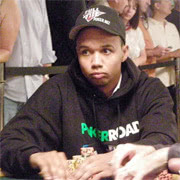 It’s no wonder that GBT’s lawyer uses the apple analogy, as FTP has been less than forthcoming about their finances, and these debts only came to light due to extensive searching by the prospective buyers. Dayanim stated that very few of the players who owe money to FTP have made any effort or expressed any willingness to pay it back. These players include Phil Ivey, David Benyamine, Barry Greenstein, Erick Lindgren, and Mike “The Mouth” Matusow, although there’s speculation that the debts extend all the way through the lineup of recent Full Tilt Pro players.
 Eight professional poker players have filed a lawsuit against Ultimate Bet for a scam that the company ran three years ago, which allowed the Cereus Network (which owns Ultimate Bet and Absolute Poker) to embezzle 20 million dollars from UB players. The players are out to crucify Ultimate Bet for a violation of the Racketeer Influenced and Corrupt Organizations Act (RICO), a piece of legislation originally created to allow the government to prosecute organized crime.
 The complaint filed last week refers to a number of unnamed defendants, known as John Doe 1-10. This anonymity is not due to an effort to maintain privacy surrounding the lawsuit, but because the plaintiffs don’t actually know who is directly responsible, due to the coverup for which they’ve cited a RICO violation:
  The last year has been a rough one for
  The Alderney Gaming Control Commission (AGCC), from whom we’ve heard a great deal during the course of the Full Tilt scandal, has issued a new statement to British citizens, urging them to take action. While the AGCC doesn’t come out and say that British players who are still owed money by Full Tilt Poker (some of the 440 million dollars in player funds that have been held by the company for almost a year now) should press legal charges, they certainly imply it. The most recent press release from the gaming commission informs players that they should contact their local authorities if they feel that they have been the victim of a crime, and also reminds them of the many legal cases currently pending against Full Tilt– just in case some British citizens are starting to think that they should get in on that action.
 As thought Full Tilt officials haven’t had enough to worry about, it now seems that Absolute Poker/ Ultimate Bet is gearing to put the final nail in the former poker giant’s coffin. According to a statement from the Kahnawake Gaming Commission, Absolute Poker and Ultimate Bet Poker will be paying back their former clients as soon as possible. To players who have seen their assets frozen since April, this hardly seems like a timely action, especially since PokerStars returned player funds months ago, but Absolute and UB have only recently resolved their problems with the United States Department of Justice, which means that players may soon see some return on accounts that have been frozen since Black Friday. The solution? To sell off the
  So what does this mean for former Absolute and Ultimate Bet Poker players? First of all, it may mean that while you’ll see some of your money returned, you may not see all of it. Ever. Some are theorizing that former players on the Cereus Poker Network may be looking at returns at 50 cents on the dollar– if that. Secondly, even a partial reimbursement is likely to create even more anger directed at Full Tilt Poker, which has yet to pay back its customers, despite the fact that the company is being bought by an investor, not sold off in pieces. Lastly, it means that Cereus Poker Network will likely be no more.
 Once again, Full Tilt Poker is facing some legal trouble– this time at the hands of a team of lawyers who are leveling yet another class action lawsuit against the company. Unlike previous lawsuits, however, this one is aimed not just at owners and heavy hitters for the company, which has been defunct since Black Friday last April, but also against Full Tilt’s legal counsel, the law firm Cozen O’Connor.
 French investment company Groupe Bernard Tapie has been busy this autumn, making plans to take over Full Tilt Poker and engaging in all the business that entails while also planning a poker tournament and trying to ease the minds of legislators and players alike.
 Groupe Bernard Tapie recently announced their plans to host the International Stadiums Poker Tour (ISPT), a blend of live and online play that aims to determine who the best players in poker really are. Since the event isn’t scheduled to take place until 2012, the company will have plenty of time to resurrect the Full Tilt reputation and win players back by promising a guaranteed $30 million prize-pool ($10 million of which is the first-place prize). The online element of this tournament is particularly interesting, as players will be competing (at least as the tournament is currently designed, but everything is subject to change) via electronic pads in dedicated online tournament rooms. If GBT is planning on taking over Full Tilt, this would be the perfect way to get players back into the FTP rooms that so many people have sworn that they’re done with. After all, who can resist a chance at ten million dollars?
 At long last, there’s a little bit of good news for PokerStars, which has seen the vast majority of its assets frozen since Black Friday last April. The United States Department of Justice, which was responsible for freezing the assets of not only PokerStars but also Full Tilt Poker and Absolute Poker, has released one account belonging to Sphene International, one of the payment processors for PokerStars.
 Players who have money tied up in Full Tilt Poker will be interested to know that the site released an “exclusive news update” to pokernews.com today, regarding their status with the undisclosed investors. Full Tilt, in the past, has been less than forthcoming with information regarding what, exactly, is going on with the site, which was previously one of the largest online poker sites in the world, and now they’ve released a short private statement, which seems to be code for “we don’t have any good news to report, or we’d be sending this out to every news source, social networking medium, and former customer.”