
Poker Blog

Meet The 2011 November Nine: Anton Makiievskyi

Anton MakiievskyiAnton Makiievskyi is in a precarious position. With the second-lowest stack against some very fierce players going into the World Series of Poker Main Event final table, he has his work cut out for him. If he can manage to pull it off, however, he’ll become the youngest person ever to win a WSOP Main Event title. This native of Dnipropetrovsk, the third-largest city in the Ukraine and a metropolitan area with an extensive history, was awed when he took his first trip to the United States (and the World Series of Poker) and found that it was one that is truly life-changing. At only 21 years of age, Makiievskyi is the youngest player at the table, and he’s stated that he finds his standing at the WSOP to be surreal.

Because the Ukraine has relaxed regulations concerning online poker (especially compared to places like the US, which is currently struggling to keep its players within the country), Makiievskyi is one of many players from the Eastern European country who have turned up at this year’s WSOP. If he can manage to bring his stack up and win the event, he will not only be the fifth Ukranian player to win a bracelet at this year’s WSOP, but also the first ever Ukrainian to win the main event. One thing is certain– if Makiievskyi wins, it’s a day that will go down in poker history.

Although he’s been playing professional poker for a couple years now, Makiievskyi’s takeaway from the WSOP Main Event is by far the largest win of his live poker career (not a big surprise given that the majority of his previous experience has been in Eastern Europe, where the buy-ins have been considerably smaller). Even if he’s the first man out come November, Makiievskyi is still guaranteed to walk away with $782,115, an amount that eclipses even the largest of his past wins by a factor of more than 40. Don’t confuse this player’s lack of large paydays for a lack of experience, however; he managed to come in second in two separate events at the Yalta Summer Poker Festival in 2009, taking home $18,787 in the $1,000 No Limit Hold’em Main Event and $15,100 for the $3,000 No Limit Hold’em. Six months later, Makiievskyi was swimming with the big fish of poker at the $10,000 No Limit Hold’em Main Event at the PokerStars Caribbean Adventure during the North American Poker Tour. He came away in 170th place– hardly a stellar finish, but good enough to net him a $17,500 win.

WSOP 2011 November NineMakiievskyi headed back home after his big-league poker experience and quickly won a satellite to the Russian Poker Tour Main Event, followed two months later by a ninth place finish at the RPT Yalta $500 No Limit Hold’em Six Max event. By the end of 2010, he was drawing attention to himself again, this time with a money finish with $5k at the RPS Main Event in Kiev.

This Ukranian supernova went radio silent for the early part of 2011, but when he sat down to play in the WSOP Main Event, he would be one young man who quickly made a name for himself among the Americans and Europeans who dominated the tournament. While he sits in eighth place with 13,825,000 in chips going into the main event, only 1.5 million ahead of Brit Sam Holden, who is currently bringing up the rear, and almost 30 million behind Martin Staszko, who has the lead, Makiievskyi is definitely a player to watch.

Another Class Action Lawsuit Barrels Towards Full Tilt

Full Tilt Poker NewsOnce again, Full Tilt Poker is facing some legal trouble– this time at the hands of a team of lawyers who are leveling yet another class action lawsuit against the company. Unlike previous lawsuits, however, this one is aimed not just at owners and heavy hitters for the company, which has been defunct since Black Friday last April, but also against Full Tilt’s legal counsel, the law firm Cozen O’Connor.
This particular suit is worth a hefty 900 million dollars, and it relies heavily on the United States’ RICO legislation, which is set up to protect individuals against racketeering and organized crime. According to the lawsuit, Cozen O’Connor has received over two million dollars in exchange for services directly related to covering up FTP’s illegal business practices. These accusations may draw the attention of the US Department of Justice, which is already investigating Full Tilt for the money laundering that their lawyers allegedly helped to conceal.

Legal precedents indicate that this means that the lawyers (as well as FTP themselves) should be returning all of those ill-gotten gains to the people from whom those funds were taken. Lary Kennedy and Greg Omotoy, who filed the suit in the U.S. District Court for the Central District of California, have left room in their lawsuit for a total of 200,000 plaintiffs, all of whom have the right to seek both the return of their money and damages from the company. In similar cases, all those who have benefited from an organization’s shady dealings have been forced to return the money they gained.

According to the lawsuit that Kennedy and Omotoy have filed, the problem with Full Tilt Poker seems to be largely that they’re operating like the large, corrupt corporations against which American citizens are currently rebelling– FTP, according to the lawsuit, failed to “create financial reserves for amounts held on behalf of players,” and instead took player money and spent it elsewhere, including handouts to key defendants and pushing forward a money laundering scheme.

If there’s one thing that the Occupy Wall Street has demonstrated in the past month, it’s that the vast majority of Americans are tired of seeing large corporations steal their money, break laws, and then get bailed out by larger corporations (or the government). What’s a poor corporation to do when they’ve made a few mistakes here and there, and now the angry mob steadily approaches? To start with: apologize.

There’s a saying that an apology consists of three parts: admitting that what you’ve done is wrong, acknowledging the damage caused and vowing not to repeat past mistakes, and making reparations to those who have been harmed. PokerStars, which was in the same boat as FTP on Black Friday, managed to make nice with their clients and the US Department of Justice because they managed to apologize– as such, their business has not suffered and has even grown. Perhaps Full Tilt could learn something from this model, if only to say, “Sorry we messed up… now let’s talk about how we can get your money back to you.”

Hellmuth Hunts For 12th Bracelet, First Day Of Second Event

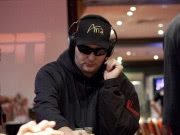
Phil HellmuthAt the end of the first day of WSOPE play, Phil Hellmuth was just another name mentioned in passing among the list of players who were still in the running after the day closed with only 80 players left. He wasn’t a chip leader and wasn’t starting the day in a particularly good position, but, nonetheless, the poker star warranted a nod, as his position in this event could mean not only that he could pass Ben Lamb for the Player of the Year title, but also that he still had a chance at nabbing his 12th bracelet at the World Series of Poker.

Hellmuth ended the day in second place on the leaderboards with over 400k in chips. As one of only 12 players remaining, he’s guaranteed at least €13,228, which moves him into first place on the PoY boards, overtaking Ben Lamb, who has held the number one spot since the WSOP events were paused (although Lamb’s performance in the Main Event could turn the tables once more, as could Hellmuth’s performance through the rest of the events in Europe). The Poker Brat didn’t seem to be effected by the change of venue from the Hotel Majestic Barriere to the Le Croisette Casino Barriere– at this point, though, it seems like nothing will come between Hellmuth and the bracelet that he’s come close (but not close enough) to winning three times already this year in Las Vegas. With so much on the line, it’s no wonder that this second day of the 2011 WSOPE events were dominated by Hellmuth– players, spectators and media alike were all focused on the action surrounding him, which you have to imagine is a little intimidating (and potentially distracting) to the other players.

Switzerland’s Guillaume Humbert, who sent Day 1 leader Flavien Guenan to the rail, is the current chip leader with 541,000 chips. Among the other 10 players who remain are David Benyamine, with 253,000; Anton Wigg, who has 201,000; and Casey Kastle, who started Day 2 as the chip leader among the Americans and now holds 119,000 chips.

In other WSOPE news, the €1,000 No-Limit Hold’em event began its first day, with three of this year’s November Niners making an appearance. Eoghan O’Dea is still in the running for the event, while Matt Giannetti and Phil Collins have been eliminated. Only 54 of the original 381 players have made it to Day 2, where they’ll join up with the players who entered on the second Day 1 of this event. Nine levels were played on Day 1A, and Australian Andrew Hinrichsen closed out the day in first place with 63,900 chips.

Coming back for another day of play are Nicholas Chouity, McLean Karr, Erik Cajelais, Randy Dorfman, and Roby Lewis, while several great names in poker won’t be returning: Tom Dwan, Erik Seidel, Jean-Robert Bellande, Barry Greenstein, Bertrand “ElkY” Grospellier, Jonathan Duhamel, Justin Bonomo, Jason Mercier, Eugene Katchalov, and Chris Moorman were all send to the rail before the close of the action.

French Investment Group Plans To Take Over Full Tilt

Full Tilt Poker NewsFrench investment company Groupe Bernard Tapie has been busy this autumn, making plans to take over Full Tilt Poker and engaging in all the business that entails while also planning a poker tournament and trying to ease the minds of legislators and players alike.
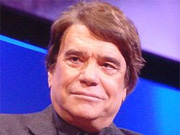
Groupe Bernard Tapie has a list of conditions that will need to be met before they’re willing to take over Full Tilt Poker. While hesitance from any company to take over what is widely regarded as a sinking ship is certainly understandable, the French company seems to have something up their sleeves. This isn’t just because Bernard Tapie, the company’s namesake and the father of current CEO Laurent Tapie, has a controversial history as a businessman, although his jail time and criminal history for match-fixing, tax evasion, tax fraud, and doctoring the books certainly doesn’t serve to make this deal look any more legit. After all, FTP has also been engaging in some seedy practices as far as the players are concerned, so Tapie, while a successful businessman, may not have the moral standing to give heart to players that have already been burned once.

Among these conditions are the hopes that the US Department of Justice will pay off the players who have seen their accounts frozen since April from the assets seized on not only Black Friday, but during the course of the last four years, as well as a full audit of FTP’s finances and approval from a licensing authority, allowing Full Tilt to begin operations again. Despite the fact that none of these conditions have been met yet (and some are very up in the air, as such cooperation from the DoJ seems unlikely, given the aggressive stance that the governmental agency has towards online poker violations, and Full Tilt’s financial practices are still in question), Tapie has released a statement that former FTP players will be offered equity in the site, and the current owners will be allowed to invest in the revived company. If Groupe Bernard Tapie isn’t paying the customers back, and former players and current owners are given a nudge towards helping to finance the company, what exactly is GBT paying for? Perhaps players are still too jaded to think clearly about Full Tilt, but the idea that there are back room deals going on with a company that is attempting to do anything other than man up and push FTP to take responsibility for the slight against the poker community leaves many people feeling completely uncomforted by this potential regime shift.

Bernard TapieGroupe Bernard Tapie recently announced their plans to host the International Stadiums Poker Tour (ISPT), a blend of live and online play that aims to determine who the best players in poker really are. Since the event isn’t scheduled to take place until 2012, the company will have plenty of time to resurrect the Full Tilt reputation and win players back by promising a guaranteed $30 million prize-pool ($10 million of which is the first-place prize). The online element of this tournament is particularly interesting, as players will be competing (at least as the tournament is currently designed, but everything is subject to change) via electronic pads in dedicated online tournament rooms. If GBT is planning on taking over Full Tilt, this would be the perfect way to get players back into the FTP rooms that so many people have sworn that they’re done with. After all, who can resist a chance at ten million dollars?
Only time will tell if Groupe Bernard Tapie can successfully pull this off, but it certainly seems like they’re carefully lining up the pieces that they’ll need to make a successful play. If they’re not careful, however, they may just fall short of the 20,000 to 30,000 players that they’re expecting for the ISPT, as players may not be so forgiving after all.

2011 WSOP Europe Kicks Off With Flavian Guenan In Lead

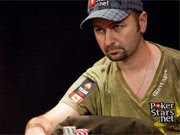
Daniel NegreanuDay 1 of the €2,500 Six-Handed No Limit Hold’em tournament kicked off the 2011 season of the World Series of Poker Europe, where 360 players arrived in Cannes, France to try to get a slice of the action. This event is the first of seven this year, and the turnout suggests that this will be the biggest year of the WSOPE yet, giving some credence to pundits who had theorized that the shutdown of American poker would lead to more live play and greater turnouts in tournaments, at least for the next year.

Friday saw eight levels of hour-long play, and, at the end, France’s Flavian Guenan held the chip lead, with 108,800. The only other player with more than 100k chips was Benjamin Pollack, who had been the chip leader until Guenan made a steal at the end of the day’s action that pushed him into first place. It seemed to everyone watching that the day was over after Pollack sent Nicolas Levi to the rail taking his chips and vaulting to first place. Levi opened the action pre-flop with a raise and Pollack, who held QsJs, called. The flop brought two more spades, and the river brought another, giving Pollack an Ace-high flush, enough to eliminate Levi, who had followed Pollack’s lead and gone all-in.

Only two players were left after Pollack closed out the action at his table– Flavien Guenan and Alessandro Speranza. The board showed Jc4d2s, and Speranza bet, prompting the Frenchman to check, which he did once more when the 9s arrived with the turn. Speranza bet again, and Guenan called. The Ks came with the river, and when Guenan checked for a third time, Speranza decided to bid one last time and went all-in. Guenan called and took the pot with a pair of Jacks, making him the day’s new chip leader.

While few people were around to see the action that changed the lead at the end of Day 1, players, spectators and media alike have all been commenting on the scenery in Cannes, where the Hotel Majestic Barriere has been dazzling everyone with its class and connection to the Cannes Film Festival. The 80 players that moved on to the second day of this tournament (including Phil Hellmuth, who is looking for not only his 12th WSOP bracelet but also a chance to snag the Player of the Year title away from Ben Lamb, who is currently in the lead, Vanessa Selbst, John Racener, Marvin Rettenmaier, and Daniel Negreanu) will have another day to take in the beauty of this gorgeous locale. It’s still anyone’s bet who will take home the €215,999 first place prize, but there’s no shortage of great players left in the game, so the competition will be fierce as we go into Day 2.

At the end of Day 1, the chip counts for the leaders are:

  1. Flavien Guenan – 108,800
  2. Benjamin Pollack – 106,425
  3. Antonio Venneri – 99,575
  4. Casey Kastle – 86,100
  5. Peter Jetten – 71,275
  6. Anton Wigg – 67,075
  7. Bruno Benveniste – 64,475
  8. Alessandro Speranza – 52,900
  9. Luca Falaschi – 52,000
  10. Tapio Vihakas – 51,000

Meet The 2011 November Nine: Eoghan O’dea

Eoghan O'Dea WSOP 2011Eoghan O’Dea (pronounced like “Owen”) has one of the more famous fathers in poker– he’s the son of Donnacha O’Dea, a former Olympic swimmer-turned-poker-pro who not only holds a World Series of Poker bracelet and two other final table appearances, but a grand total of 23 money finishes there. The elder O’Dea has appeared on Late Night Poker and won the Poker Million tournament in 2004, and his father was a big poker player as well, so it’s no wonder that Eoghan O’Dea entered into the world of poker.

The younger O’Dea has had a history of strong, aggressive poker playing which has helped to cement his status as a serious player. He came in second in the Poker Million in 2008 and won the iPoker European Championship of Online Poker III main event the same week. O’Dea has also come in second in the 2009 World Poker Tour Marrakech main event and achieved four money finishes in the 2011 WSOP outside of his position as one of the November Nine. O’Dea had a strong showing throughout the main event, starting (and finishing) the final day with the second-highest number of chips– he sits with 33,925,000, while Martin Staszko has only around 40 million in first place. The players will return in November in the same seats in which they left, and O’Dea notes that his seat isn’t the best and that the competition at the final table is quite fierce, but he says that he can’t complain, having gotten this far.

O’Dea has had his fair share of wins and earnings, and he currently sits at number 18 on the list of all-time Irish earners. He’s gained over $700,000 in live poker winnings, and his largest gains have been at the 2008 Ladbrokes Poker Million, which brought him $260,000, and at WPT Marrakech, where he gained another $388,532. He also pulled in $315,000 from the iPoker European Championship, so it’s no wonder that many people consider O’Dea one of the strongest contenders at the final table this year. At only 26 years, he’s already made a name for himself, and he remains one of the best-known players in this year’s November Nine.

WSOP 2011 November NineThis fine player stayed out of the spotlight for the majority of the WSOP 2011 Main Event, playing at a lot of tables full of amateurs and staying out of the camera’s glare. O’Dea had very few all-ins during the course of the tournament so far, but his gains have been steady, nonetheless. He hasn’t faced too many really big pots, and this usually aggressive player has been playing it closer to the chest this year at the WSOP.

With a famous father, O’Dea has surely received his share of pointers and fatherly advice when it comes to poker, but, as he says, where the WSOP Main Event was concerned, his father’s only advice to him was: “Make sure you change your flights on time.” It looks like Eoghan is on his own on this one, but it seems like he’s been getting along just fine.

Stay tuned to Max Poker Bonus for more November Nine introductions and updates.

Matt Waxman Becomes First American To Win WPT Paris

Matt Waxman WPT ParisSince the World Poker Tour first went to Paris during its inaugural year, an American has never won the title there– until this year, when US-born Matt Waxman made WPT history by snagging the title and the €518,750 prize for first place. Waxman managed to get a healthy chip lead and eliminate his competition, including Martin Jacobson, who was the most experienced poker player at the final table but busted early after coming into the game extremely short-stacked.

Jacobson was the first player eliminated from the six-handed final table when, feeling the pressure as his short stack was eaten away by blinds, went all-in on AJ against Mikko Sundell, who held pocket Jacks. The cards didn’t hold anything to help Jacobson out, and he went home with €88,900. Despite the gain in chips, Sundell lost most of them shortly thereafter to Waxman, who left Kaverman to finish up the job. Sundell went all-in with K6 against Kaverman’s AJ with 5d5c8h showing on the board. A J on the turn and a 2 on the river meant that Sundell was the fifth place finisher with €133,330. Kaverman would be the next to go, this time at the hands of Fred Magen, who called Kaverman’s all-in bet and managed to pull a straight out of his hat. Kaverman went home with €155,550.

Spectators and players were beginning to notice a trend. Sundell had eliminated Jacobson. Kaverman then eliminated Sundell. Next, Magen eliminated Kaverman. One has to imagine that Magen, even if he’s not a superstitious kind of guy, had to feel a little nervous as the play went on, down to three players– if the trend continued, he would surely be the next one out. Magen, Lemaire, and Waxman played for quite some time before Magan tried to steal the pot by bidding too much, and Waxman went all in. He would take the pot with Ace high, and Magan would leave in third place with €211,100.

Hugo Lemaire WPT ParisFinally, the game had come to heads up competition. Neither Matt Waxman or Hugo Lemaire had a record of substantial wins before, and it may well have been anyone’s game, had Waxman not had a substantial chip lead. The American held 7,863,000 chips, while the Frenchman had a mere 1,550,000, and Waxman would use this to his advantage to bait Lemaire and force his hand. When Lemaire was forced into a call on the third hand of heads up play, Waxman made the flush draw that he needed and sent Lemaire home with €311,100 and an entry to WPT Amneville (€3,500 value). Meanwhile, Waxman collected a new title, a moment in poker history, €518,750, and a seat in the WPT World Championship Event for 2012.

Past winners of the World Poker Tour Paris events have been Christer Johansson of Sweden (Season 1), Frenchman David Benyamine (Season 2), Brits Surinder Sunar and Roland de Wolfe (Seasons 3 and 4, respectively), Christian Grundtvig of Denmark (Season 5), and Theo Jorgensen of Norway (Season 9—the WPT bowed out of Paris in Seasons 6-8). Not only has no American won before Maxman, but the final table in this event has never been dominated by Americans, as often happens in so many other locales in this and other poker tours. The vast majority of the final table seats since the beginning of the tournament have gone to the French, the British, and the Scandinavians, with very few exceptions (noteworthy Americans who have made final tables at the WPT Paris in the past include Allen Cunningham, Erick Lindgren, and Alan Goehring). In last year’s WPT Paris, the final table saw representation from only three countries– Denmark (1 players), Sweden (2 players), and France (5 players), making Waxman’s victory this year just that much more remarkable.

Annie Duke Talks On Craig Ferguson, Calls Online Poker Illegal

The Late Late ShowAnnie Duke has been getting a lot of attention over a comment that she made during her appearance on “The Late Late Show with Craig Ferguson,” where she went to promote her new book and the Epic Poker League. Critics have nothing negative to say about 99% of her spot on the American show, but they take issue with three words that Duke uttered in response to a comment from Ferguson, who said, “Now, isn’t poker illegal?” Duke responded, “No, that’s only online.”

Since her appearance, Duke has been absolutely lambasted for stating that online poker is illegal. Some critics have accused her of knowing nothing about poker (although it’s perfectly obvious from her history that such statements aren’t true) while others have stated that she’s “campaigning against online poker” or that she “doesn’t care about online poker because she has the Epic Poker League.” They’ve accused Duke of being hypocritical, as she used to play for Ultimate Bet, and her brother, Howard Lederer, is a known owner of Full Tilt. How did they play online poker in the US if it was illegal? Is she admitting to engaging in illegal activity and incriminating her brother in the process? What’s the real scoop behind Duke’s statement?

The criticisms of Duke’s statement (which lasted approximately one second) seem to break down into the following arguments:

1. Online Poker Isn’t Illegal

Okay, technically, online poker isn’t illegal. You can hop onto Facebook and play Texas Hold’em with the amateurs any time you want to, and no one is going to try to stop you (save for your boss or significant other). When people say “online poker,” however, they’re almost always referring to money games, which are inaccessible, while not illegal. What IS illegal is the banks, transferring money to poker sites that operate within the US and/or have US players. Transferring the money is the act to which the government objects, which is why they’ve been going after large online poker companies and financial institutions, not individual online poker players. To summarize: playing poker, not illegal. Funding poker to make it possible to play, illegal– therefore, the truthfulness of Duke’s statement is really just a matter of semantics.

2. Annie Duke is admitting to illegal activity.

Again, no. Because online poker isn’t illegal for the individual playing, but rather for the banks who fund transactions, Duke isn’t admitting to any kind of wrong-doing. Secondly, there’s a greater philosophical issue about whether or not Duke (like every other poker player in America) thinks that online poker should be illegal.

3. Annie Duke is scaring people away from the world of poker.

Nonsense. What’s scaring people away from the world of online poker is the fact that the US government has made doing so pretty much impossible. Duke stating that it’s illegal to play online isn’t going to affect the portion of the population that is already playing poker (as by now, they know the rules) or the part of the population that doesn’t really want to play (as they don’t care about the rules). All the people who are on-the-fence about playing are probably only on the fence because of the difficulty in playing while in the US, and while it’s possible that their hesitation comes from some other source (lack of income, addictive personality), whether or not Annie Duke, in the beginning of a talk about her new book about playing better poker and discussion of the Epic Poker League and how it’s going, makes a passing comment to move the conversation along is not going to sway them.

4. Duke should stick with the rest of the players and say that online poker is legal.

Duke was trying to move the conversation along. She only had a short amount of time on the show to promote her book (and to a lesser degree, the EPL), and if she had gone into a long spiel about the nature of the legality of online poker in the United States, it would have taken the time and focus that she needed to complete her purpose on the show. Ferguson wasn’t looking for a philosophical debate about poker’s legality, and if Duke had started down that road, there’s no way that the discussion would have gotten the lengthy airtime that it would need to be resolved conversationally. Again, it’s just an issue of semantics; it wasn’t a political statement.

Epic Poker League5. Duke has the EPL now, so she doesn’t care about the fate of online poker.

Ridiculous. Of course Duke cares about online poker. It’s a safe bet that all professional poker players care about the fate of online poker. Yes, Duke has the Epic Poker League. She also has a new book out. Her focus, however, remains on poker. If anything, Duke is doing the poker industry a service by keeping Americans focused on poker at a time when their frustration is growing and their interest is waning. With most of the poker-related shows and tournaments no longer airing on American television, Epic Poker League is a fresh face that is drawing in a lot of viewers. If there’s one thing Annie Duke knows how to do, it’s stay alive in a game where it seems like the cards are stacked against her, and that’s just what she’s doing now– staying alive when American poker is struggling.

Us Doj Releases First PokerStars Account

PokerStars US DOJAt long last, there’s a little bit of good news for PokerStars, which has seen the vast majority of its assets frozen since Black Friday last April. The United States Department of Justice, which was responsible for freezing the assets of not only PokerStars but also Full Tilt Poker and Absolute Poker, has released one account belonging to Sphene International, one of the payment processors for PokerStars.

PokerStars has been fully complying with the US Justice Department since the site was booted from doing business in America, unlike Full Tilt Poker, which has made news time and again for delays in legal proceedings, multiple class action lawsuits, and money trapped in customer accounts that has now been there for almost six months. PokerStars has released the money that their American players had in their accounts as soon as possible and has been forthright about the circumstances facing the company and how this translates for their current and former customers.

The DOJ account release of one of the accounts that PokerStars has, located in Bank Hapoalim (Suisse) SA in Luxembourg, does come with a stipulation: the company must keep a minimum balance of at least 5.5 million dollars in the account at all times. The exact wording used by the US government was: “WHEREAS, the Government and PokerStars have reached an agreement pursuant to which PokerStars consents to the restraint of $5.5 million in the Account for the pendency of the above captioned case, and the Government agrees that it does not object to PokerStars’ use of the remaining funds in that account”. In short, PokerStars has to keep money put aside equal to the amount that they reportedly made off of their US customers.

Because this 5.5 million was gained illegally, as online gambling has serious restrictions in the United States (to the point where Annie Duke recently made a public comment about the legality of poker but illegality of online poker in the US), the US Government may be planning to seize these assets once the rest of the legal action against the site has been resolved. At any rate, the money will stay there until the federal government figures out what it wants to do.

Although many players thought that Black Friday could negatively affect PokerStars as a company, it remains the leader in online poker. With so many other online poker sites pulling out of the US market (either by force or as a preemptive measure to avoid possible trouble in the future), the loss of the Americans from the player pool seems to be affecting everyone. With Full Tilt floundering, however, PokerStars has still seen steady growth since Black Friday, despite being targeted by the US government.

While PokerStars still has plenty of other accounts that haven’t been unfrozen yet, this new development has a lot of people wondering whether this is a sign that the damage caused by Black Friday is starting to be resolved. It’s too early to determine whether other accounts with PokerStars or other sites will be unfrozen, but PokerStars’ constant cooperation with the US government and general hands-up, mea culpa stance can only be helping them at this point in time.

Full Tilt Poker Makes More Vague Statements

Full Tilt Poker NewsPlayers who have money tied up in Full Tilt Poker will be interested to know that the site released an “exclusive news update” to pokernews.com today, regarding their status with the undisclosed investors. Full Tilt, in the past, has been less than forthcoming with information regarding what, exactly, is going on with the site, which was previously one of the largest online poker sites in the world, and now they’ve released a short private statement, which seems to be code for “we don’t have any good news to report, or we’d be sending this out to every news source, social networking medium, and former customer.”

The long and short of the press release is this: Full Tilt has “concluded the exclusivity period of negotiations with their current potential investor”, and now the site is looking for “additional potential investors to conclude the sale/partnership of the Full Tilt Poker brand and its assets”. English translation? They’ve got nothing. No investor, about whom we’ve been hearing for months now– and so much of the hope that former FTP customers had about getting their funds back in a timely manner hinged on this alleged investor (don’t put it past Full Tilt to invent investors to keep the wolves at bay, if that’s what it takes to buy some time). Past news reports stated that this investor was working with the US Department of Justice to deal with the class action lawsuit and get American players their money back, but without this investor, players shouldn’t hold their breath for timely repayments.

If the class action lawsuit from the States weren’t enough, Full Tilt Poker has just been hit with another– this time from Canada. The lawsuit is against Pocket Kings ltd (the owners of Full Tilt) and several of their subsidiaries, although it names many of the big name players for the site as defendants, including Ray Bitar, Howard Lederer, and Nelson Burtnick. Apparently, American players aren’t the only ones getting a little miffed that Full Tilt hasn’t paid back even a cent of the money owed their players (save, of course, for their alleged payments to certain FTP Pros).

Full Tilt also lost their Chief Marketing Officer, Lothar Rentschler, this week. His farewell email, sent out to many media outlets, was essentially an apology and expressed disappointment in the way that Full Tilt Poker is going. When you have nothing left to market because you’ve been shut down, there’s apparently no need for a Chief Marketing Officer anymore.

Full Tilt Poker has their hearing with the Alderney Gambling Control Commission scheduled for September 15th. Jeff Ifrah, one of FTP’s attorneys, issues a statement that “nobody wants to come to September 15th and not have a deal which is either finalised or close to finalisation to the point that it can be shared with Alderney and result in extension of that date.” It seems that FTP will be looking to file another extension, which is likely to further anger already outraged players.

The site has carefully worded their press release to imply that giving out too many details of their situation may be dangerous in terms of finding new investors (that doesn’t bode well), and, as they go on to explain, their first priority is finding a buyer so that they can use the capital to repay the players. So, wait… if no one buys Full Tilt, what happens to everyone’s money?